



FLR for Beginners: What a Female-Led Relationship Actually Looks Like
A practical guide to female-led relationships. What FLR actually is, four levels of authority, daily-life examples, how to start, and common misconceptions.

If your image of a female-led relationship comes from the internet, you're probably picturing leather, whips, and a man on his knees looking miserable. That version exists. It's also about as representative of FLR as a Hollywood car chase is representative of your morning commute.
Most female-led relationships look like regular relationships where a woman holds more authority over shared decisions. That's it. The details vary enormously -- from gentle guidance to comprehensive household control -- but the core is simple: she leads, and both parties prefer it that way.
This post is for people who are curious about FLR but have no idea what it actually looks like when the costumes come off and the dishes need washing.
What FLR Actually Is
A female-led relationship is a relationship in which the female partner holds a recognised position of authority. This authority is explicitly agreed upon by both parties. It's not passive-aggressive manipulation. It's not one partner steamrolling the other. It's a deliberate, consensual structure where leadership flows primarily from the woman.
The "female" in FLR refers to the dynamic structure, not a statement about gender essentialism. Some people who practice FLR use different language -- female-led dynamic, woman-led relationship, or simply their own terms. What matters is the arrangement, not the label.
FLR is related to D/s but isn't identical to it. Many FLR practitioners don't identify with the kink community at all. For them, FLR is a relationship model, not a kink. For others, FLR is the framework and D/s provides the tools. Both approaches are valid.
The key distinction from traditional relationships: in an FLR, the authority imbalance isn't accidental or unspoken. It's the point. Both partners chose it, both maintain it, and both find it more satisfying than the alternative.
The Four Levels
FLR is commonly described in four levels. These are descriptive, not prescriptive. They're useful for locating yourself on the spectrum, not for defining where you should be.
Level 1: Low-Key Authority
The woman makes most day-to-day decisions, but the structure is subtle. She chooses where to eat, what to do this weekend, how to arrange the house. He defers naturally on most things, and both partners are more comfortable this way than when they tried to split everything fifty-fifty.
From the outside, this looks like a normal relationship where one partner happens to take the lead. There's no protocol, no explicit power exchange, no rituals. The woman's authority is real but undramatised.
Daily life examples:
- She decides the social calendar
- She manages household finances
- He checks with her before making plans
- Disagreements are resolved with her final say as the default
Many couples are already at Level 1 without calling it anything. Naming it -- recognising the pattern and agreeing that it works -- is often the first step into intentional FLR.
Level 2: Active Leadership
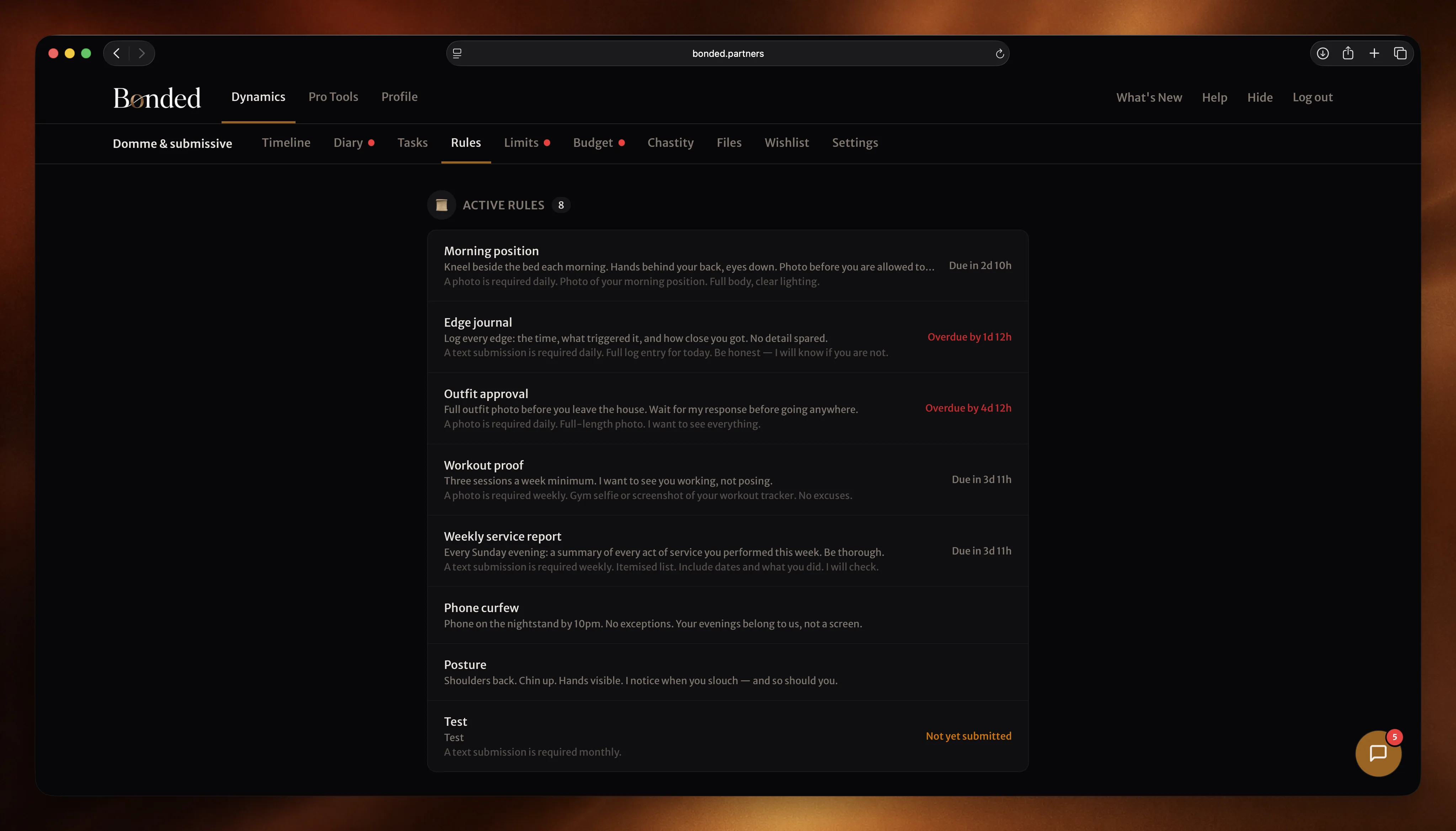
The woman's authority is explicitly acknowledged and extends into more areas. There are some agreed-upon rules or expectations. He has a defined role in the household. She provides direction and he follows it, not because he can't think for himself but because the structure works for both of them.
Daily life examples:
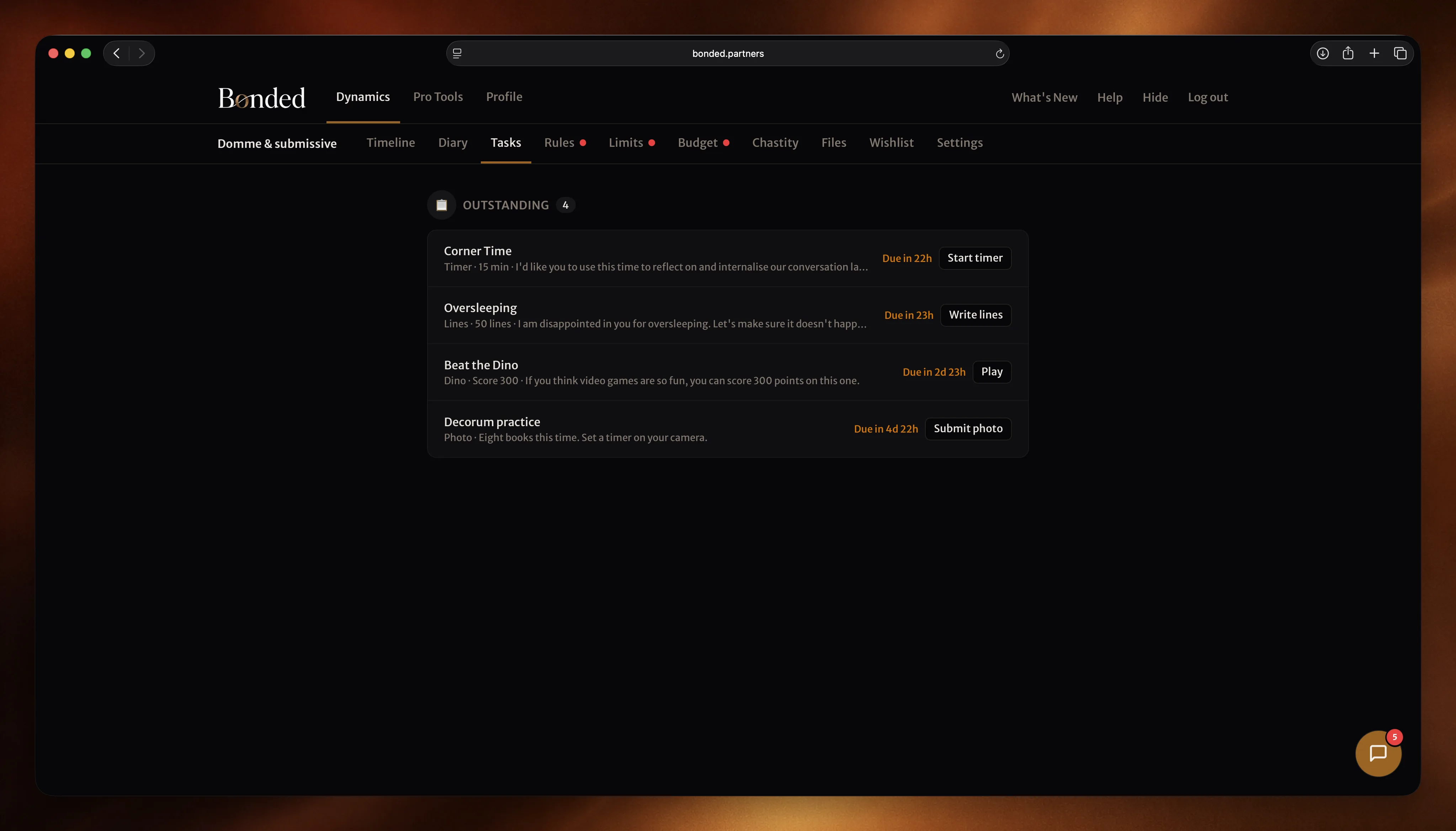
- She assigns household responsibilities and reviews their completion
- She sets the budget and he operates within it
- He has standing tasks: cooking, cleaning specific areas, running errands
- She gives direct instructions and expects them to be followed the first time
- They've discussed the dynamic explicitly and both affirm it regularly
Level 2 is where FLR starts to overlap with D/s. The authority is visible. There are expectations and accountability. But the atmosphere is more "functional household with clear leadership" than "dungeon protocol."
Level 3: Defined Authority
The woman's authority is formalised and extends to most areas of life. Rules are explicit. Consequences for non-compliance exist. The power exchange is a significant part of the relationship's identity.
Daily life examples:
- He has a detailed daily routine set by her
- She controls or oversees finances, including approval for purchases
- There are protocols for communication, behaviour, and household management
- Consequences are applied consistently when expectations aren't met
- The dynamic is discussed, maintained, and evolved with intentionality
This level clearly intersects with D/s. Many couples at Level 3 use D/s tools -- rules with evidence, task management, journaling, scheduled reviews -- within the FLR framework.
Level 4: Comprehensive Control
The woman's authority is near-total and extends to intimate, personal, and lifestyle decisions. This is the most intensive form of FLR and the one most likely to overlap with 24/7 D/s dynamics.
Daily life examples:
- She controls his daily schedule, wardrobe, social interactions, and personal habits
- Financial authority is complete
- Intimacy is on her terms, potentially including chastity management
- He has comprehensive service obligations
- The power exchange is the defining feature of the relationship
Level 4 is rare and requires an extraordinary degree of trust, communication, and mutual commitment. It's not "more" FLR in the sense of being better -- it's more FLR in the sense of being more encompassing. Most people don't want or need this level, and that's completely fine.
How to Start
If FLR interests you and you don't know where to begin, here's a practical path.
Have the conversation
This is the hardest part and also the most important. Someone needs to say: "I think I'd be happier if you/I took the lead on more things." That sentence, or some version of it, opens the door.
Common fears:
- "She'll think I'm weak." Most women in FLR-curious partnerships find the vulnerability attractive, not off-putting.
- "He'll think I'm controlling." The difference between controlling and leading is consent. If he's asking for it, you're not imposing it.
- "We'll do it wrong." There is no wrong. There's only what works for both of you.
Start with decisions, not rules
Before any protocol or formal structure, simply redirect decision-making. She starts making more calls. He starts deferring more often. See how it feels. Does she enjoy the authority? Does he feel relieved, not diminished? If yes, you've found your foundation.
Add structure gradually
Once the leadership pattern is established and comfortable, you might add structure. A chore schedule she creates and he follows. Financial oversight where she reviews spending. Standing expectations that don't need to be re-discussed every time.
Each addition should be discussed and agreed upon. FLR authority is real, but it's built on a foundation of mutual consent. Adding a new expectation is a conversation, not a decree -- at least initially. Once the dynamic is established and both parties trust the framework, the woman may add expectations more unilaterally. That's a feature of the dynamic, not a bug. But it's a feature that develops, not one that starts at full intensity.
Check in regularly
Is this still working? Is the balance right? Is anyone feeling resentful, unheard, or unappreciated? These check-ins should happen outside the dynamic's structure -- two people talking honestly about whether the arrangement serves them, with the freedom to adjust or stop.
Misconceptions
FLR attracts a remarkable number of wrong assumptions. Let's address the most common ones.
"FLR is humiliation-based"
Some FLR dynamics include humiliation as a consensual element. Most don't. The vast majority of FLR is about leadership and service, not degradation. The man in an FLR is not typically being mocked or diminished. He's fulfilling a role he finds meaningful under the guidance of someone he respects. These are different things.
"FLR is anti-feminist"
This one comes from two directions. Some feminists argue that any formalised gender role is regressive. Some traditionalists argue that women leading is inherently unnatural. Both miss the point.
FLR is a consensual arrangement between adults. The woman leads because she wants to and because her partner wants her to. That's not anti-feminist -- it's the definition of agency. Feminism is about choice, not about prescribing which choices are acceptable.
"FLR is always sexual"
FLR can include sexual elements. Chastity management, intimate service, bedroom authority. But many FLR practitioners describe the dynamic as primarily domestic and relational, with sexuality being one component among many -- and sometimes not a significant one.
A couple where she manages the household budget, sets the weekly meal plan, and directs the cleaning schedule is practicing FLR whether or not anything kinky happens in the bedroom.
"The man in an FLR is a pushover"
The men who thrive in FLR are often accomplished, decisive, and capable in their professional lives. FLR is not about inability to lead. It's about choosing to follow in a specific context because the dynamic creates something that bilateral decision-making doesn't.
Many men in FLR describe it as a relief. Not a relief from responsibility -- they still carry their share -- but a relief from the constant negotiation of a perfectly egalitarian household. When one person leads, decisions happen faster, conflicts reduce, and both partners know their role. That's not weakness. It's efficiency with emotional benefits.
"FLR relationships can't be equal"
They're not equal in terms of authority. They are equal in terms of value, respect, and agency. The woman's authority is a gift from the man's consent, and it's sustained by the quality of her leadership. If she leads poorly, the dynamic fails. Both partners have power -- it's just expressed and structured differently.
Where FLR Meets D/s
For couples who want to blend FLR with explicit D/s tools, the intersection is natural.
Rules map directly to FLR expectations. Household responsibilities become rules with evidence requirements. "Keep the kitchen clean" becomes a rule with a specific standard, a frequency, and photo evidence. The FLR expectation gains the accountability structure of D/s.
Budget oversight is one of the most common FLR expressions. She manages the money. In a D/s framework, this becomes a Budget with categories, limits, receipt tracking, and reviews. The FLR authority gets the practical infrastructure to be exercised consistently.
Chastity is often part of Level 3 and Level 4 FLR dynamics, where the woman controls or manages the man's sexual release. This is deeply personal and varies enormously between couples, but for those who include it, it's an expression of her comprehensive authority that carries real daily weight.
Journaling serves FLR dynamics the same way it serves any D/s dynamic -- giving the man a space to reflect on his experience, process his emotions, and communicate things he might not say in conversation. The woman reads and responds, deepening her understanding of how the dynamic feels from his perspective.
Bonded was built to be gender-neutral by design. The tools work for any configuration of Dom(me) and submissive, which means they work for FLR without requiring any conceptual translation. She's the Dom(me). He's the submissive. The features do the rest.
FLR Is Not One Thing
If there's a single takeaway, it's this: there is no correct version of FLR. Level 1 is not "FLR lite" and Level 4 is not "real FLR." They're different expressions of the same principle -- a woman leading and a man following, by mutual choice.
Your FLR might look like her choosing all the restaurants. It might look like him kneeling to put on her shoes every morning. It might look like a shared spreadsheet with chore assignments and a monthly review meeting. It might look like all of these, or none of them.
The only thing it has to look like is something that works for both of you. Everything else is detail.
Go deeper
Read the full guide→