



Compare
Bonded vs habit trackers.
Habitica, Streaks, Structured, Todoist — they're excellent productivity tools. But a D/s dynamic isn't a productivity system. Here's where generic apps hit their limits.
We get it
Why people try them.
They're familiar. You already use one for work or personal goals. Adding D/s tasks to an existing system feels easier than adopting something new.
They're polished. Years of development have made apps like Habitica and Todoist genuinely good at what they do. Streaks, reminders, gamification — the core habit loop is well-designed.
They're discreet-ish. A task called “Morning routine” looks innocent enough in a generic tracker. As long as nobody looks too closely.
They're free (mostly). Most have generous free tiers. If you're testing whether structure works for your dynamic at all, the price is right.
The problem
Where they break down.
No second person. This is the fundamental issue. A habit tracker is a single-player tool. Your Dom(me) can't see your tasks, review your evidence, or hold you accountable within the app. You're tracking for yourself, then reporting through a separate channel — text, Discord, a phone call. The accountability loop is broken by design.
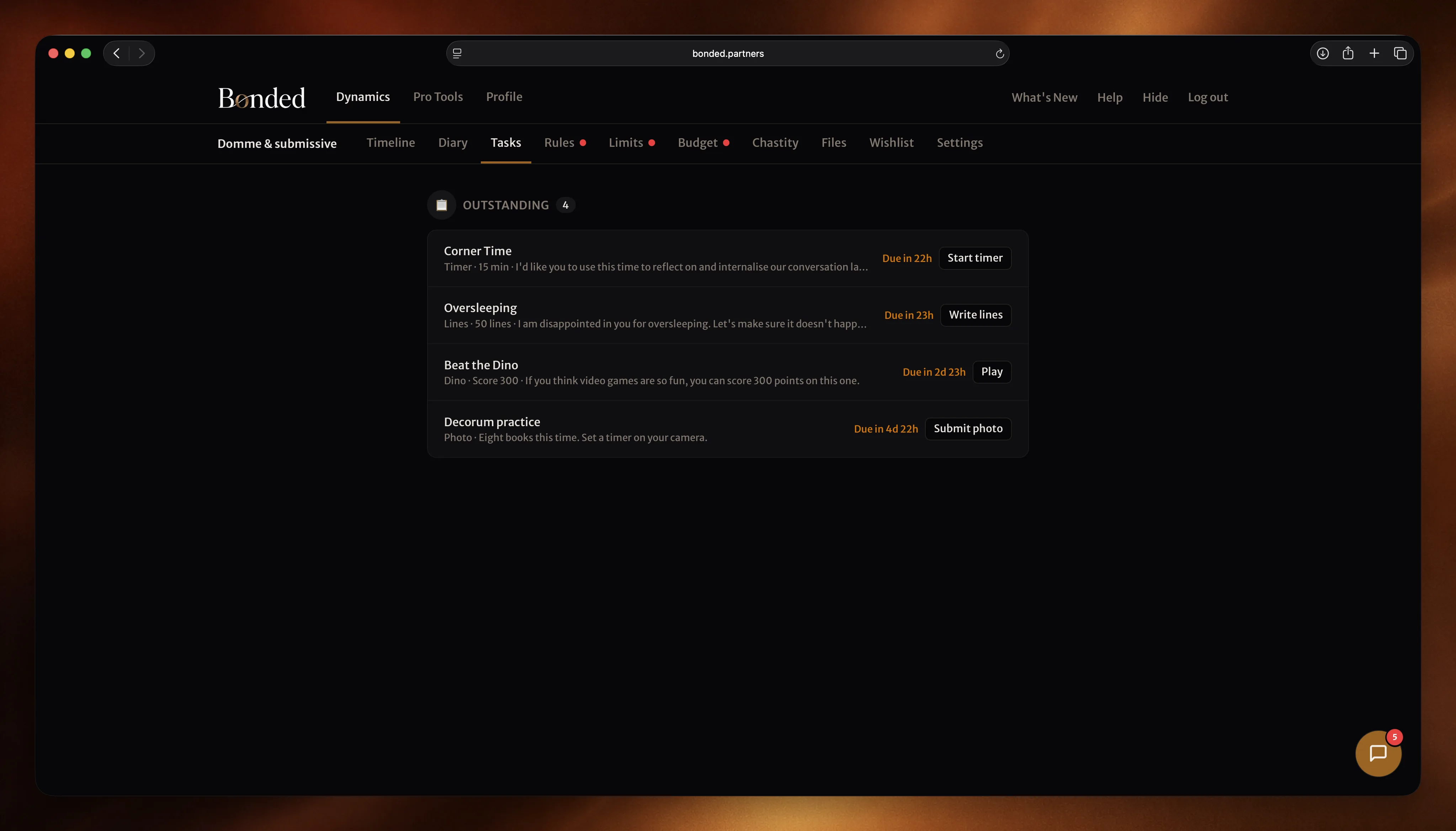
No evidence. You can mark a task as “done” in Habitica. But where's the proof? D/s rules often require photo evidence, video, audio, a document, or a written account. Habit trackers don't handle file uploads tied to specific tasks. Checking a box is not the same as submitting evidence to someone who's watching.
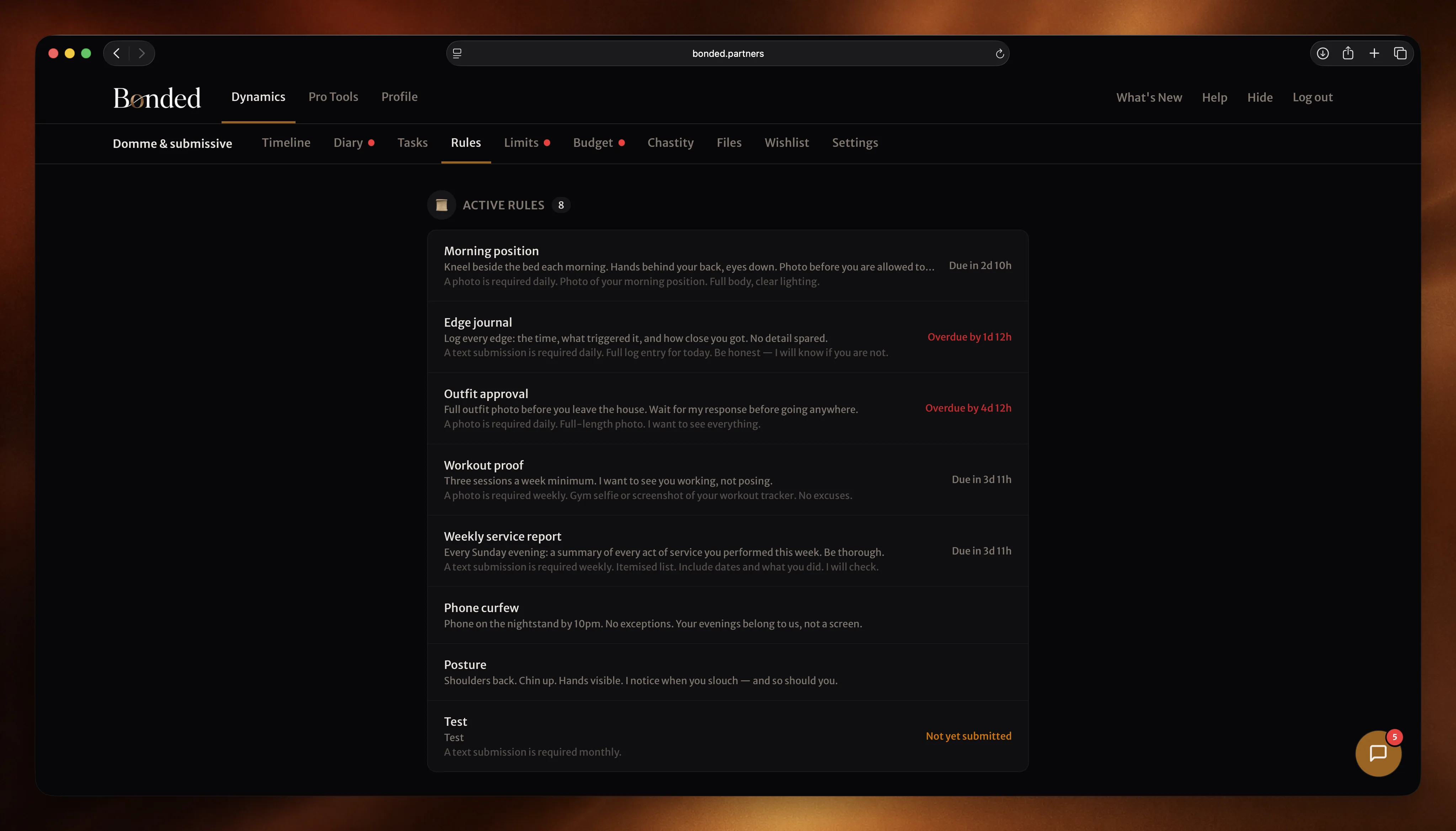
No roles. There's no concept of a Dom(me) and a submissive. No permissions model — who can create tasks, who completes them, who reviews them. Everyone is equal in a habit tracker. That's the opposite of what you're building.
No limits, no negotiation. A D/s dynamic needs boundary infrastructure — a living record of what's acceptable, what's off-limits, what's curious. Habit trackers have no concept of consent architecture. They track what you do, not what you've agreed you will or won't do.
No chastity, no diary, no chat. Live countdown timers. Daily reflections with review. In-platform messaging. These aren't features you can bolt onto a generic tracker. They require a platform that understands the relationship.
Privacy is a constant risk. Your “Morning routine” task is fine until someone borrows your phone and sees “Submit photo evidence to Sir” in your Todoist. Habit trackers have no biometric lock, no panic button, no discreet mode. They're designed to be seen — that's the motivation model.
Self-reporting isn't accountability. The psychological difference between checking a box yourself and submitting evidence to someone who will review it is enormous. One is a personal promise. The other is a dynamic. Habit trackers give you the first. D/s requires the second.
Side by side.
Comparing Bonded to typical habit trackers (Habitica, Streaks, Todoist, etc.)
| Bonded | Habit trackers | |
|---|---|---|
| Power exchange | ||
| Dom(me) / sub roles | — | |
| Dom(me) creates rules | — | |
| Sub submits evidence | — | |
| Dom(me) reviews & responds | — | |
| Limits negotiation | — | |
| Accountability | ||
| Photo / video evidence | — | |
| Lines tasks | — | |
| Timer tasks | — | |
| Push notifications | ||
| Overdue tracking | Partial | |
| Activity timeline | — | |
| Relationship | ||
| Diary with review | — | |
| Chat | — | |
| Chastity tracking | — | |
| Budget oversight | — | |
| Shared files | — | |
| Wishlist | — | |
| Privacy | ||
| Biometric lock | — | |
| Panic button | — | |
| Auto-deleting evidence | — | |
| Data deletion on exit | — | |
| No real name required | — | |
| Habit tracking | ||
| Streak tracking | — | |
| Gamification / XP | — | |
| Recurring personal tasks | Rules | |
“I tried using Habitica for my daily protocol. Marking tasks 'complete' with no one watching felt like talking to myself. The structure only means something when someone is on the other end.”
The honest answer.
A habit tracker might work if
- You're exploring solo and don't have a partner yet
- Your dynamic is entirely self-directed
- You only need simple task reminders
- You don't need evidence or review
Bonded is the right tool if
- Your dynamic involves two people
- Accountability means someone else is watching
- You need evidence, limits, or chastity tracking
- Privacy matters
- You want one platform, not five apps taped together
Habit trackers solve a different problem. They're built for personal goals — exercise, reading, meditation. D/s dynamics are interpersonal by nature. The tool needs to be too.
Built for dynamics, not habits.
Free to start. See what purpose-built feels like.
Not ready yet? Get D/s insights and product updates in your inbox.