



The Emotional Labour of Submission (And How to Honour It)
Submission takes real emotional work — vulnerability, obedience, self-reflection, correction. Here's how to recognise and honour that labour.

There is a persistent myth that submission is the easy role. The Dom(me) does the thinking, the planning, the deciding. The submissive just... follows. Obeys. Receives. In this view, submission is passive. It is the absence of effort rather than the presence of it.
Anyone who has actually submitted knows how laughable this is.
Submission is work. Not the glamorous, visible, acknowledged kind — the quiet, internal, relentless kind. It is emotional labour in the truest sense: the ongoing management of feelings, presentation, and vulnerability in service of the relationship. And because it is invisible, it is chronically undervalued.
This post is for both roles. For submissives: validation that what you do is real work, even when it does not look like work from the outside. For Dom(me)s: a map of what your partner is actually doing so you can recognise and honour it.
What Emotional Labour Looks Like in Submission
Emotional labour, as a concept, describes the work of managing your own emotions to fulfil the expectations of a role or relationship. For submissives, this labour is constant and multifaceted.
The Vulnerability of Obedience
Obedience is not automatic. It is chosen, moment by moment, and every act of obedience requires a submissive to override their own autonomy. That is the point — but it is also the cost.
Consider a simple instruction: "Kneel." To comply, the submissive must suppress the part of themselves that says "I am an independent adult and I do not kneel for anyone." They must choose vulnerability over self-protection. They must trust that this instruction comes from a place of care, not contempt. They must manage any internal resistance — not eliminate it, because that is neither possible nor healthy, but manage it so that their obedience is genuine rather than grudging.
Now multiply that by every instruction, every rule, every protocol, every day. The submissive is not simply doing what they are told. They are continuously choosing to do what they are told, and managing the emotional complexity that comes with that choice.
This is especially true for rules that feel arbitrary or whose purpose is not immediately clear. A submissive who follows a rule they do not understand is exercising enormous trust. They are deferring their own judgement to their Dom(me)'s, betting that there is a reason even if they cannot see it. That bet costs something every time they make it.
The Cognitive Load of Service
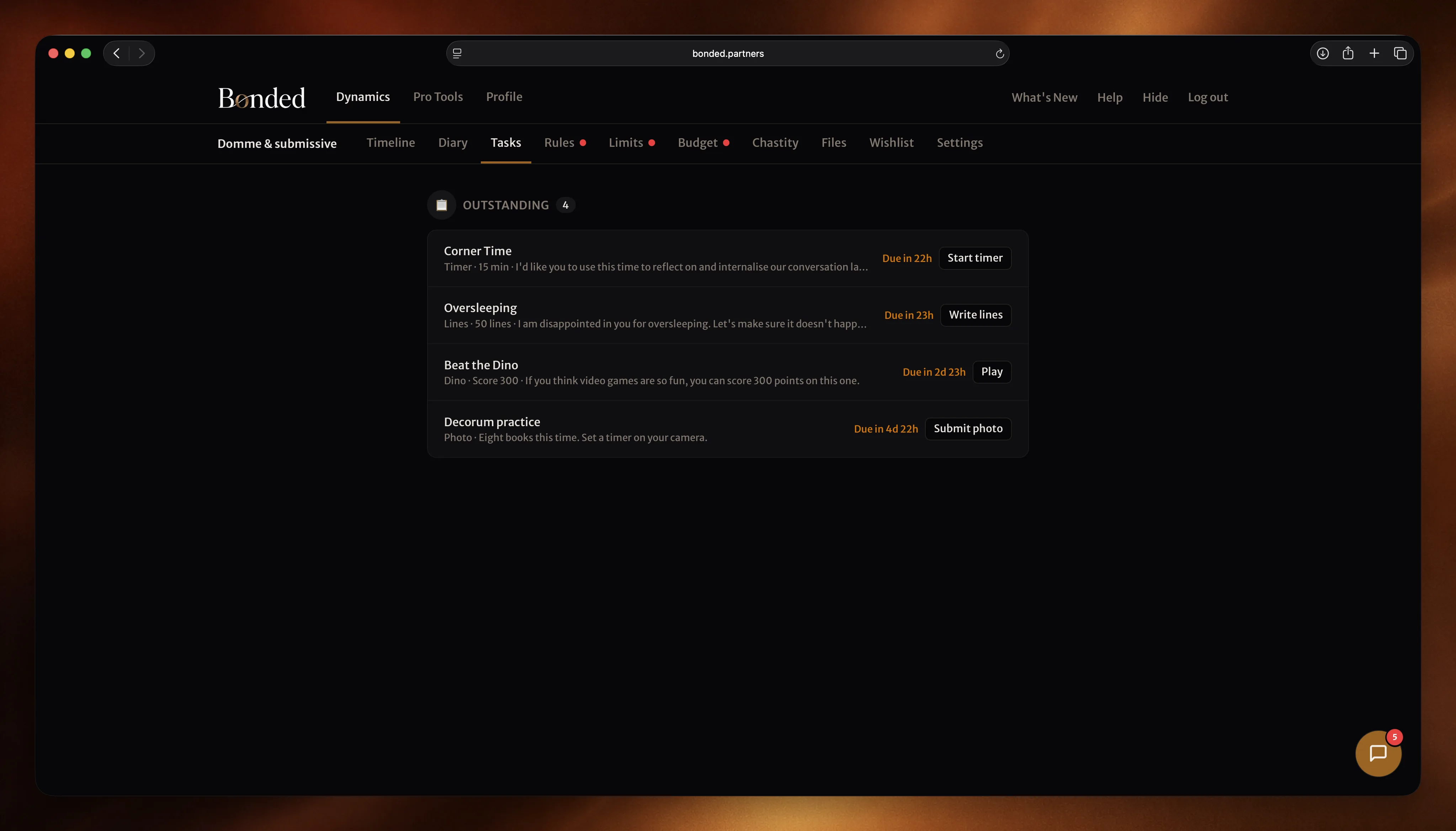
Submissives in service-oriented dynamics carry significant cognitive load. They are anticipating needs, remembering preferences, tracking protocols, managing household tasks, monitoring their own behaviour against a set of expectations, and doing all of this while also living their own life.
This is the same cognitive load that research identifies in domestic labour more broadly — the "mental load" of remembering, planning, and managing that is often invisible precisely because it is done well. When the Dom(me)'s coffee appears without being asked for, it looks effortless. It is not. It required the submissive to notice the time, remember the preference, prioritise the task, and execute it while whatever else they were doing got paused.
Good service is not mindless. It is hyper-mindful. And hyper-mindfulness is exhausting.
The Emotional Work of Reflection
Many dynamics include a reflective practice — journaling, diary entries, verbal debriefs. These are valuable tools. They are also work.
Writing honestly about your feelings is hard. Writing honestly about your feelings regarding your submission — your struggles, your resistances, your failures, your desires — is harder. It requires sitting with discomfort rather than avoiding it. It requires articulating things you might prefer to leave vague. It requires making yourself legible to your Dom(me) in ways that leave you exposed.
The submissive who writes a diary entry saying "I resented the new rule today and I do not know why" is doing real emotional labour. They are processing, examining, and communicating something difficult. They are trusting that honesty will be met with understanding rather than punishment. Every entry is an act of courage, especially the ones that say uncomfortable things.
Bonded's Diary feature exists because this reflective work deserves a dedicated space. Not a text message that gets lost in a scroll of logistics. Not a conversation that gets derailed. A place where the submissive's inner experience is preserved, visible, and valued. The act of writing it down is the labour. The act of reading it is the honour.
The Frustration of Correction
Being corrected is not fun. Even in a dynamic where correction is expected, consented to, and ultimately valued, the moment of being told you got something wrong stings. The submissive must manage multiple competing feelings simultaneously:
- The sting of criticism
- The desire to defend themselves
- The awareness that defence might not be appropriate
- The obligation to receive the correction gracefully
- The need to actually learn from it and adjust
- The frustration of not being perfect
This emotional management is invisible. From the outside, the Dom(me) corrects and the submissive accepts. From the inside, the submissive is doing a five-ring emotional circus act while maintaining a composed exterior.
And when the correction is about something the submissive worked hard on? When they genuinely tried and still fell short? The frustration compounds. They have to process the gap between effort and outcome while also processing the correction itself, often in real time, without a break.
The Courage of Limits
Setting and maintaining limits is work. It should not be, in an ideal world — your boundaries should be effortless. But in the real world, many submissives struggle with limits because:
- They want to please and limits feel like refusal
- They fear disappointment from their Dom(me)
- They question whether their limits are "valid" or whether they are being "too sensitive"
- Cultural messaging tells them that a "good" submissive has fewer limits
- They are navigating the genuine desire to push their own boundaries alongside the need to protect them
A submissive who says "that is a hard limit for me" in the face of all these pressures is doing something brave. A submissive who updates their limits as they learn more about themselves — adding new ones, not just removing old ones — is doing something even braver. It requires self-knowledge, self-advocacy, and trust that their Dom(me) will respect the boundary without resentment.
The Labour of Consistency
Perhaps the most underappreciated form of emotional labour in submission is simply showing up consistently. Not on the exciting days when the dynamic feels electric and submission flows effortlessly. On the boring days. The tired days. The days when you are stressed about work and the last thing you want to do is follow a protocol about how you greet your Dom(me) when they get home.
Consistency is not automatic. It is maintained through effort. Every day that a submissive follows their rules, does their tasks, maintains their protocols, and inhabits their role is a day they chose to do so. The choice is invisible because it happens internally, but it is real and it costs energy.
The Risk of Submissive Burnout
When this emotional labour goes unacknowledged, burnout follows. Submissive burnout looks like:
- Loss of desire to submit
- Resentment toward the Dom(me) or the dynamic
- Going through the motions without emotional engagement
- Feeling invisible or taken for granted
- Withdrawing from reflective practices (skipping diary entries, giving superficial answers in check-ins)
- Increased resistance that is not playful but genuinely frustrated
- Questioning the dynamic, not from growth but from exhaustion
Burnout is not the submissive "getting lazy" or "losing their submission." It is the predictable result of sustained, unacknowledged labour. The fix is not more discipline. It is recognition.
For Dom(me)s: How to Recognise and Honour the Labour
If you are a Dom(me) reading this, you have an opportunity. Recognising your submissive's emotional labour and actively honouring it is one of the most powerful things you can do for your dynamic. Here is how.
See the Invisible Work
Start noticing. Not just the completed tasks but the effort behind them. Not just the obedience but the choice to obey. Not just the diary entry but the vulnerability required to write it.
When your submissive follows a difficult rule, acknowledge that it was difficult. "I know that one is hard for you. I see you doing it anyway." This single sentence can transform a submissive's experience of their own labour. It says: your effort is visible to me.
When they write an honest diary entry that reveals struggle, do not just address the struggle. Address the honesty. "Thank you for telling me this. I know it was not easy to write." The content matters. But the act of writing it matters too.
Acknowledge Effort, Not Just Outcomes
If your submissive tried hard and still missed the mark, separate the effort from the outcome. "You did not quite get this right, and we will work on that. But I can see how much effort you put in, and that matters to me." This is not softness. It is accuracy. They did try. Pretending otherwise is not higher standards — it is blindness.
Express Gratitude Without Undermining Authority
Some Dom(me)s resist expressing gratitude because they worry it undermines their authority. It does not. "Thank you for your service today" is not a demotion. It is a Dom(me) who is secure enough in their authority to acknowledge that their submissive's contribution has value. The most powerful leaders in any context are the ones who recognise their people. D/s is no exception.
Create Rituals of Recognition
Build acknowledgement into the structure of your dynamic. A weekly moment where you specifically tell your submissive what you noticed and appreciated that week. A physical gesture that means "I see your effort." A periodic gift or treat that is explicitly tied to their labour, not their service outcomes.
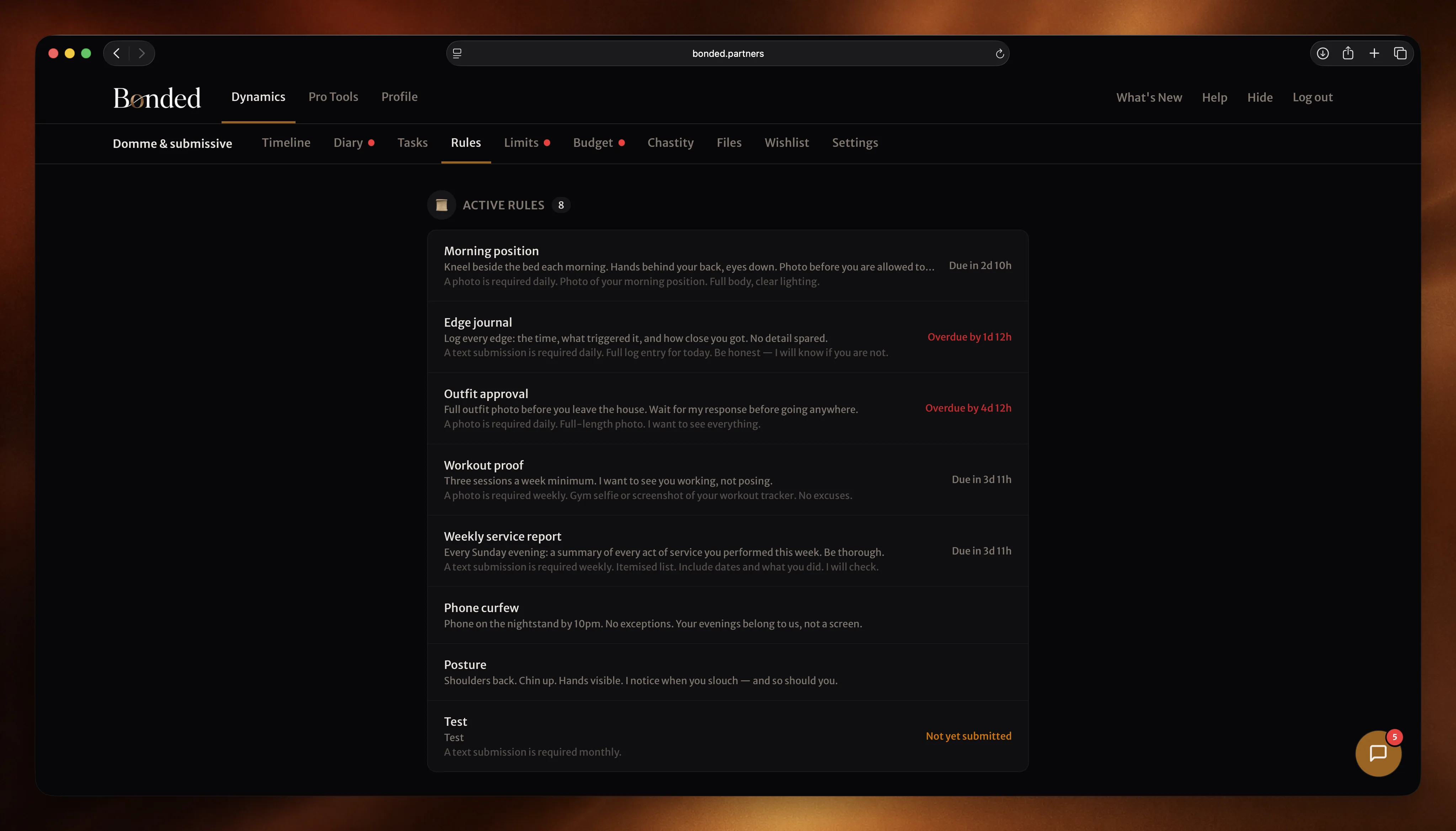
Bonded's Wishlist feature can serve this purpose beautifully. A submissive's wishlist is not just about desires — it is a window into what they value. Using it to surprise them with something they have wanted is a tangible expression of "I pay attention to you as a person, not just as a role."
Reduce Unnecessary Load
Not all emotional labour is necessary. Some of it is created by poor dynamic design. Review your rules and protocols with an eye toward what serves the dynamic and what is just... weight.
A rule that reinforces connection? Worth the labour. A rule that exists because you forgot to remove it and your submissive is dutifully following it even though it no longer makes sense? That is unnecessary load. Clean your protocols regularly. Remove what does not serve. Your submissive may not ask for this because they feel it is not their place. It is your job to audit.
Give Them Space to Be Imperfect
Perfectionism is the enemy of sustainable submission. If your submissive feels that anything less than flawless execution will result in disappointment, they are carrying an unbearable weight. Create explicit room for imperfection. "I expect your best effort, not perfection" is a gift. Mean it.
Honour Their Timeline
Every day your submissive shows up, they are adding to the story of your dynamic. Over weeks and months, this accumulates into something profound. The Timeline feature in Bonded creates a visible record of this accumulation — and looking at it together can be a powerful way to honour the labour. "Look at what you have built with me. Look at the consistency. Look at the growth." The submissive's effort deserves to be seen not just in the moment but across time.
For Submissives: Validating Your Own Labour
You do not need your Dom(me)'s permission to acknowledge that what you do is work. Here are some truths worth sitting with:
Your submission is active, not passive. You are not the absence of dominance. You are a force in your own right, directed by choice toward a shared purpose. Every act of submission is an act of will.
Your feelings about submission are valid, including the hard ones. Resentment, frustration, exhaustion, doubt — these are not failures of submission. They are normal responses to demanding emotional work. Feeling them does not mean you are doing it wrong.
Struggling does not mean you are not submissive enough. The submissive who follows every rule effortlessly is not more submissive than the one who struggles and follows them anyway. Arguably, the struggle makes the submission more meaningful, not less.
You are allowed to need things. Rest, recognition, appreciation, gentleness, care. Needing these things is not incompatible with submission. It is incompatible with being a robot, which you are not.
Your burnout is information. If you are burning out, something in the dynamic needs to change. Not you. The dynamic. Your exhaustion is data, not deficiency. Communicate it. A good Dom(me) will want to know.
Your reflective work has value. Every diary entry, every honest check-in, every moment of self-examination — these are contributions to the dynamic. They make the dynamic better, deeper, more informed. You are not just recording your experience. You are shaping the dynamic through your willingness to be known.
The Labour Is the Gift
There is a way of talking about submission that makes it sound like the submissive gives up something — autonomy, control, independence — and the Dom(me) receives it. As if submission is subtraction.
In reality, submission is addition. The submissive adds their labour, their vulnerability, their consistency, their courage, and their trust to the dynamic. These are gifts of enormous value. They are also enormously costly to give, because they require the submissive to do sustained emotional work that is often invisible, frequently difficult, and rarely acknowledged as what it is.
The best dynamics are the ones where this labour is seen clearly by both partners. Where the Dom(me) understands that their submissive's obedience is not the absence of resistance but the active management of it. Where the submissive understands that their work has value even when it is not validated. Where both partners show up knowing that what they do is hard, and choosing to do it anyway, together.
That is not the absence of power. That is power exchange in its fullest form.
Go deeper
Read the full guide→